


It's August, the sun's out, and the last thing on your mind is the heating. Which is exactly why now is the best time to think about it. Come the first properly cold week in October, every plumber in Bristol is flat out and you're sat in a cold living room wondering why the radiator is warm at the bottom and stone cold at the top.
Bleeding a radiator is one of the few jobs where a homeowner with ten minutes and a 50p key can genuinely sort it themselves. So get the kettle on, and let's run through it properly.
What cold spots actually tell you
Where the cold bit is matters. It's the single most useful diagnostic you've got:
- Cold at the top, warm at the bottom — trapped air. Air rises and pools at the top of the radiator, stopping hot water filling it. This is the one you can fix yourself.
- Cold at the bottom, warm at the top — that's not air. That's usually sludge: corrosion debris settling in the base of the radiator and blocking flow. Bleeding won't touch it.
- Whole radiator cold, others fine — likely a stuck valve or a balancing problem.
- Gurgling, banging or kettling noises — air or debris in the system. Worth investigating rather than ignoring.
How to bleed a radiator, step by step
You'll need a radiator bleed key (a couple of quid from any hardware shop), an old towel and a small container. That's it.
- Turn the heating off and let the radiators cool. Hot water under pressure and your hands are not a good mix.
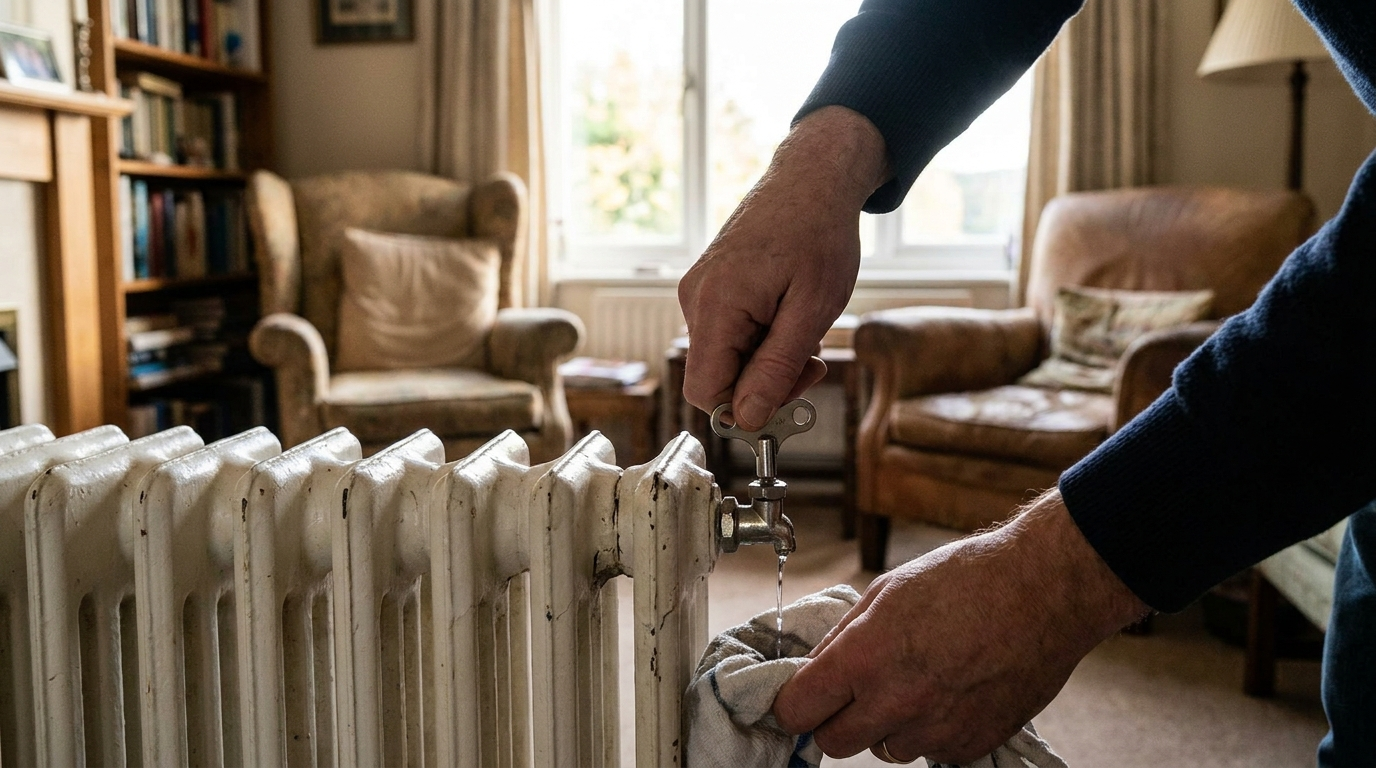
- Find the bleed valve — a small square screw at the top corner, side or occasionally the back of the radiator.
- Hold your towel underneath, slot the key on and turn it slowly anti-clockwise. A quarter to half a turn is plenty. Don't remove the screw entirely.
- Listen for the hiss. That's the trapped air escaping — exactly what you want.
- Close it when water appears. The moment the hissing stops and a dribble of water comes out, tighten it back up. Snug, not gorilla-tight.
- Check your boiler pressure. Bleeding lets pressure out. Most UK systems want roughly 1 to 1.5 bar when cold. If the gauge has dropped below that, top it up using the filling loop.
If you're doing several radiators, start with the one furthest from the boiler and work back. On a two-storey Bristol terrace, that usually means starting upstairs.
Cold at the bottom? Don't keep bleeding it
This is where a lot of people waste an afternoon. If the bottom of the radiator is cold, there's no air to release — you're just letting pressure out of your system for nothing.
Sludge builds up over years, particularly in older Bristol housing stock with original steel pipework. Signs to look for: black water when you bleed, cold patches along the bottom, or a boiler that rumbles like a kettle. The fix is usually a chemical flush or, in worse cases, a power flush. As a rough guide, a power flush on a typical three-bed semi tends to land somewhere in the £400–£600 range, with bigger systems costing more. Prices vary a lot by radiator count, access and how bad the sludge is, so treat that as a ballpark and get a couple of quotes.
When one radiator hogs all the heat
If the rooms nearest your boiler are roasting and the far bedroom never gets warm, your system probably needs balancing rather than bleeding. That's adjusting the lockshield valves so hot water is shared out evenly instead of taking the path of least resistance.
It's fiddly, it involves a thermometer and a fair bit of patience, and honestly most people are better off having a Bristol plumber do it in an hour than spending a Saturday on it.
When to stop and call someone
Bleed away happily. But put the key down and get a professional in if you spot any of these:
- Water leaking from the valve after you've retightened it
- Black or gritty water coming out
- Boiler pressure dropping repeatedly after you've topped it up — that points to a leak somewhere
- Radiators still cold after bleeding and balancing
- Anything involving the gas side of your boiler — that's Gas Safe territory, no exceptions
For the non-heating bits — a radiator that needs taking off to decorate, a wonky bracket, a bit of pipe boxing that's come loose — a handyman in Bristol is often the cheaper call. And if you're not sure who you need, our tradespeople page lays out who does what.
Sort it now, not in November
Half an hour with a bleed key in August saves you joining the queue in the first cold snap. And if bleeding doesn't fix it, you've found out now — while plumbers still have diaries with gaps in them.
Phixed connects Bristol homeowners with verified local plumbers, electricians, carpenters and handymen. No lead fees for trades, no faff for you, payment held safely until the job's done, and reviews that only come from real completed work.
Download Phixed on the App Store or Google Play and get your heating checked before you need it.